Google I/O 2026 marks a historic pivot from link-based search to autonomous AI agents. Explore how this shift in ai agent vs traditional automation impacts the future of the web and publisher traffic.
Google's annual developer conference has historically been a showcase of incremental improvements. Google I/O 2026 was something different: a declaration that the link-based web as we know it is being retired.
At the event, Google announced a fundamental restructuring of its core search product — moving away from the familiar blue-link results page toward a system built around AI agents, conversational synthesis, and autonomous task completion. Powered by Gemini 3.5 Flash, the new architecture doesn't just surface information — it acts on it. The implications for publishers, developers, and anyone who has built a business around organic search traffic are profound.
From Crawler to Conversationalist
For nearly three decades, Google Search operated on a deceptively simple premise: crawl the web, index pages, and return a ranked list of links. Users did the clicking, the reading, and the synthesizing. The intelligence was in the ranking; the labor was on the human.
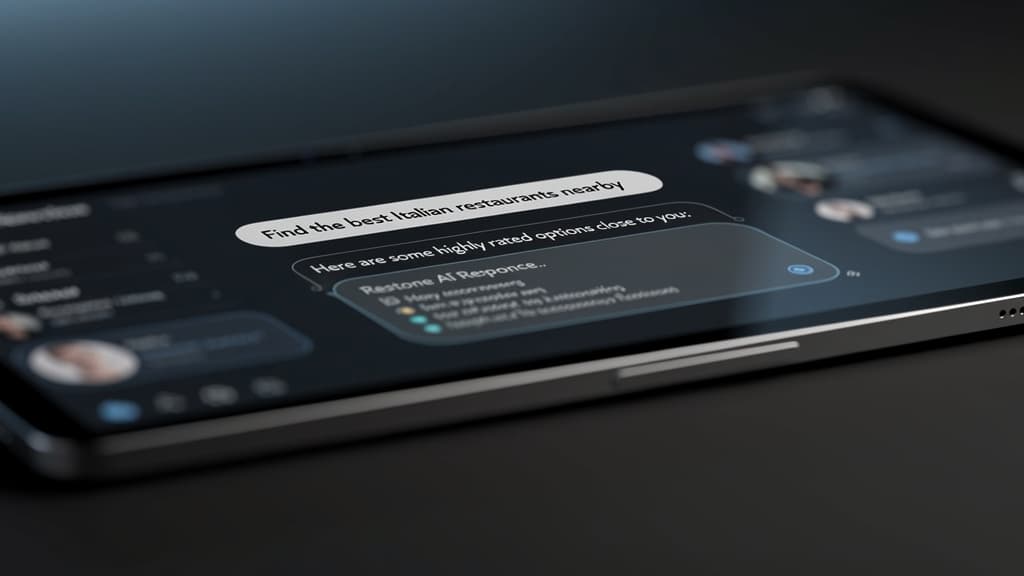
That model is now being replaced. According to reporting from TechCrunch, Google's new search experience centers on information agents — AI systems that don't just find relevant pages but read, reason across, and synthesize them into direct, conversational answers. The user asks; the agent resolves. No clicking required.
This isn't a chatbot bolted onto a search bar. Google is explicitly framing the shift as a move beyond chatbots. As TechCrunch noted in its coverage of Gemini 3.5 Flash, the company is betting its next AI wave on agents — systems capable of multi-step reasoning, tool use, and autonomous action — rather than single-turn conversational interfaces.
What AI Agent vs Traditional Automation Actually Means Here
The distinction between AI agent vs traditional automation is more than semantic — it defines the architectural leap Google is making.
Traditional automation, including earlier generations of Google's own featured snippets and Knowledge Panels, was rule-based: extract a specific data type from a structured source, display it in a fixed format. An AI agent operates differently. It can:
- Decompose a complex query into sub-tasks
- Retrieve and reason across multiple sources simultaneously
- Maintain context across a multi-turn conversation
- Execute follow-on actions (booking, purchasing, summarizing a document) without returning the user to a browser
Traditional search automation answers the question "What page has this answer?" AI agents answer the question "What is the answer, and what should I do with it?"
Gemini 3.5 Flash is the model underpinning this shift — optimized for speed and efficiency in agentic workflows, where latency across multiple sequential tool calls compounds quickly. Google's choice to lead with Flash rather than its most capable model signals a priority on responsiveness over raw benchmark performance: agents need to feel fast to be usable.
The Traffic Reckoning for Publishers
The most immediate and commercially significant consequence of this shift is what it does to web traffic. If users receive synthesized answers directly within Google's interface, the incentive to click through to source websites collapses.
This isn't speculative. The trajectory has been visible since the rollout of AI Overviews in 2024, which multiple studies linked to measurable click-through rate declines on informational queries. Google I/O 2026 accelerates that trajectory from a feature to a foundational design philosophy.
Publishers who have built revenue models around display advertising — which requires page visits — face structural pressure. SEO strategies optimized for ranking in a link-return paradigm need to be reconsidered entirely. The question is no longer "How do I rank for this query?" but "How does my content get cited by an agent that may never send a user to my site?"
Google has not yet provided clear answers on attribution, citation standards, or revenue-sharing mechanisms for publishers whose content trains and informs these agents — a gap that is already generating significant industry tension.
The New Interface: Conversational and Agentic Search in Practice
For end users, the experience shift is significant. TechCrunch's hands-on guide to Google's new AI agents describes an interface where users can initiate extended, multi-step research tasks — not just ask a question, but delegate an investigation.
Practical examples from the announcement include:
- Deep research tasks: Ask an agent to compare mortgage rates across lenders, synthesize the results, and flag the top three options based on user-specified criteria
- Action-oriented queries: Request that an agent book a restaurant, draft a follow-up email, or file a support ticket — all without leaving the search interface
- Persistent context: Agents can remember prior queries within a session, allowing for iterative refinement rather than starting from scratch with each search
This positions Google Search less as a directory and more as a personal operating layer — a system that doesn't just know things but does things.
Competitive Landscape: Google Moves to Close the Gap
The timing of this announcement is not coincidental. OpenAI's operator-style agents, Perplexity's answer engine, and Microsoft's Copilot integration into Bing have each chipped away at Google's dominance on informational queries. Google I/O 2026 is a direct response — a signal that the company intends to own the agentic layer, not cede it to challengers.
The advantage Google brings is distribution. Gemini 3.5 Flash-powered agents are being integrated across Google Search, Google Assistant, Android, and Chrome — giving them access to a user base that no standalone AI product can yet match. The risk for competitors is that Google's agentic pivot doesn't just improve search; it redefines the surface area of the competition entirely.
What to Watch Next
Several critical questions will determine how this transition unfolds over the next 12 to 18 months:
Publisher negotiations: Will Google establish formal licensing or revenue-sharing arrangements with content creators whose work feeds these agents? The legal and regulatory pressure — particularly in the EU — will intensify if it doesn't.
Advertiser adaptation: Google's advertising business is built on clicks. If organic clicks decline, the paid search model faces its own disruption. Expect new ad formats designed for agentic interfaces — sponsored answers, agent-recommended products, in-flow purchase placements.
Developer ecosystem: Google announced agent APIs at I/O 2026. How quickly third-party developers build on top of these interfaces will determine whether the agentic search layer becomes a platform or a walled garden.
Regulatory scrutiny: Antitrust regulators in the US and Europe have already been examining Google's search dominance. A pivot that further concentrates information retrieval within Google's own interface — eliminating the link as a traffic distribution mechanism — will draw additional attention.
Google I/O 2026 didn't just announce new features. It announced a new theory of what search is for. Whether that theory benefits users, publishers, and the broader web ecosystem — or primarily consolidates power within Google's own infrastructure — is the defining technology policy question of the next several years.
Last reviewed: May 20, 2026