OpenAI is reportedly developing a smartphone designed to replace the traditional app grid with an AI-driven task stream. We analyze the strategic implications for the mobile ecosystem and generative AI business trends 2026.
The smartphone has looked essentially the same for fifteen years. A grid of app icons. A notification shade. A home button or a gesture. Swipe, tap, repeat. It is one of the most durable interface paradigms in consumer technology — and OpenAI apparently thinks it is ready to die.
Reports surfaced this spring that OpenAI is developing its own AI smartphone, sourcing chips from MediaTek and Qualcomm and tapping Luxshare — the contract manufacturer known for its Apple supply chain work — for production. Analyst Ming-Chi Kuo, whose hardware supply chain reads are among the most reliable in the industry, projects mass production could begin in the first half of 2027, with up to 30 million devices shipped across the first two years. The defining design choice: replacing the traditional app grid with an agent task stream.
That last detail is the one worth sitting with. This isn't a spec story. It's a thesis about how humans should interact with software — and whether OpenAI can impose that thesis on one of the most entrenched consumer habits on earth.
The App Grid Is a Filing Cabinet
To understand why OpenAI might want to blow up the app grid, it helps to remember what the app grid actually is: a filing cabinet metaphor applied to a touchscreen. You store tools. You open them when you need them. You close them and put them back. The mental model is fundamentally tool-first — the user decides which instrument to pick up and when.
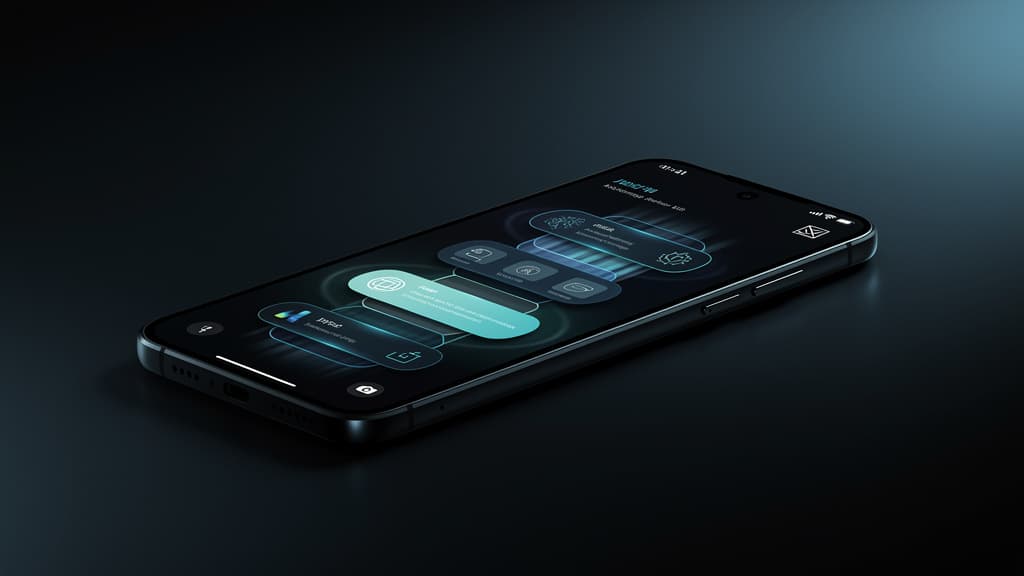
An agent task stream inverts this. Instead of navigating to a weather app, a calendar app, a maps app, and a messaging app to plan your morning, you express an intent — get me ready for my 9am in Brooklyn — and the agent orchestrates across those surfaces invisibly. The interface becomes outcome-first. The apps, if they exist at all, are implementation details.
This is not a new idea in AI circles. It is, in fact, the logical endpoint of every "AI assistant" pitch since Siri launched in 2011. The difference is that OpenAI is proposing to build the hardware layer to enforce it — not to ask iOS or Android to accommodate it.
That distinction matters enormously.
Why Hardware, Why Now
OpenAI's move into hardware follows a pattern we've seen before. When a platform company believes the existing hardware layer will constrain its software ambitions, it builds its own. Google did it with Pixel to guarantee Android's reference implementation. Apple did it with the Mac-to-Apple Silicon transition to control performance and efficiency tradeoffs. Meta is doing it with its AI glasses and Ray-Ban partnership to own the ambient compute layer.
The smartphone OS duopoly — iOS and Android — is a genuine strategic problem for any company trying to deploy persistent, cross-app AI agents. Apple and Google both have strong incentives to ensure that third-party AI layers don't displace their own assistant products, don't get privileged system access, and don't accumulate the kind of behavioral data that comes from watching everything a user does across every app. Siri and Gemini are not going to cheerfully step aside.
Building a phone is OpenAI's answer to that problem. If you control the OS, or at minimum the primary interaction layer, you can give your agent the system-level permissions it needs to actually function as an orchestrator rather than a glorified search bar.
Analyst Ming-Chi Kuo projects up to 30 million devices shipped in the first two years of production, with mass manufacturing beginning as early as H1 2027.
Thirty million units over two years sounds ambitious until you remember that it's roughly what a mid-tier Android OEM ships in a quarter. In global smartphone terms, this is a niche launch — a beachhead, not a blitz. The strategic logic isn't to outsell Samsung in year one. It's to establish a reference platform, prove the agent-first interface works at scale, and create leverage in the broader ecosystem negotiation.
The Counterarguments Are Real
Let's be honest about the headwinds, because they are substantial.
Consumers are deeply habituated to apps. The app economy didn't just succeed because it was technically elegant — it succeeded because it gave users legible control. You know what the Instagram app does. You know where your photos are. You know how to delete TikTok when you're trying to be productive. An agent task stream abstracts all of that, which means it also abstracts accountability. When the agent books the wrong restaurant or misreads your calendar, who do you blame? Where do you go to fix it?
Developer ecosystems don't pivot easily. The App Store and Google Play represent trillions of dollars of accumulated investment. Every app developer, every mobile-first startup, every enterprise IT team that deployed a custom iOS app has bet on the current paradigm. OpenAI would need to offer a compelling developer story — and fast — to avoid shipping a device with a thin application layer.
The trust problem is acute. An agent-first interface requires giving the AI system far more access to your life than any previous mobile paradigm. It needs to read your messages, understand your calendar, know your location history, interpret your financial transactions. OpenAI is not currently perceived as a privacy-first company. Convincing mainstream consumers to hand over that level of access will require either a dramatic trust-building campaign or a target market that is already deeply bought into the OpenAI ecosystem.
Hardware is genuinely hard. The graveyard of tech companies that thought software competence would translate to hardware success is long. Amazon's Fire Phone. Essential. The Humane AI Pin. Each failed for different reasons, but the common thread is that building a device people actually want to carry and use every day is a distinct discipline — one that requires supply chain relationships, industrial design talent, carrier negotiations, and after-sales support infrastructure that software companies chronically underestimate.
What This Means for the Mobile Ecosystem
Even if OpenAI's smartphone fails commercially — which is a real possibility — its launch will reshape the competitive dynamics of the mobile industry in ways that matter for anyone tracking generative AI business trends in 2026 and beyond.
First, it accelerates Apple and Google's own agent integration timelines. Both companies have been cautious about how aggressively to push AI into the core OS interaction model, partly because of regulatory scrutiny and partly because they don't want to break the app ecosystem that generates enormous revenue. A credible OpenAI hardware threat changes the calculus. Expect more aggressive moves toward system-level AI orchestration from both platforms within the next 18 months.
Second, it pressures the chip ecosystem in interesting ways. The choice of MediaTek and Qualcomm — rather than a custom silicon play like Apple's — suggests OpenAI is prioritizing speed to market over long-term vertical integration. But it also signals that on-device AI inference capability is now a baseline expectation for any serious AI hardware product. Chip vendors who can't deliver efficient transformer inference at the edge will lose design wins.
Third, it creates a new category of enterprise consideration. IT departments that have spent years managing iOS and Android device fleets now have to at least scenario-plan for a third platform. If OpenAI targets enterprise users — where the productivity case for agent-first interfaces is strongest — the MDM vendors, security vendors, and enterprise app developers all face new complexity.
The Deeper Bet
Strip away the supply chain details and the unit projections, and OpenAI's smartphone play is really a philosophical wager: that the app grid is a transitional interface, not a permanent one, and that the company that defines what comes next will capture enormous value.
That wager might be right. The app paradigm does have real limitations that become more visible as AI capabilities improve. There is something genuinely awkward about having a powerful language model available on your phone and still manually switching between six apps to accomplish a single goal.
But being right about the direction of travel and being the company that successfully navigates the transition are very different things. OpenAI has the model quality, the brand recognition, and apparently the supply chain relationships to make a serious attempt. What it doesn't yet have is a proven track record in hardware, a developer ecosystem, or a clear answer to the privacy and trust questions that an agent-first device raises at their most pointed.
The app grid has survived every previous attempt to replace it. OpenAI is betting it won't survive this one.
That's a bold thesis. The next 24 months will tell us whether it's a visionary one.
Sources:
- OpenAI's First Hardware Play Might Be a Phone That Replaces Your App Grid With an Agent Task Stream — The Decoder
Last reviewed: May 06, 2026