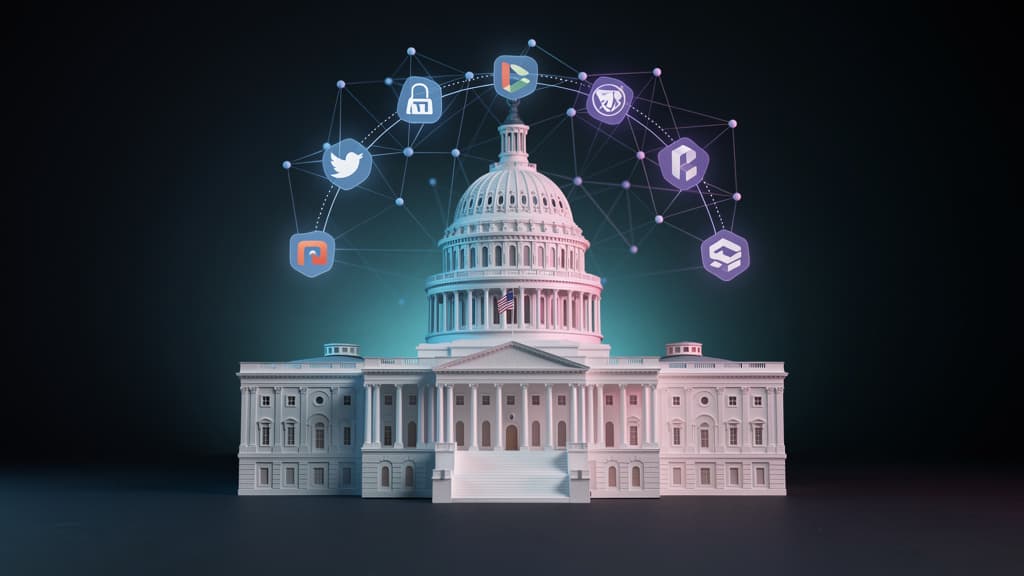
The US government has secured pre-release access to frontier AI models, bypassing standard safety guardrails. Learn how this shift impacts enterprise AI security risks and governance.
The US government has quietly secured something it has never had before: pre-release access to the most powerful AI models in the world, complete with reduced safety guardrails, tested inside classified environments. This isn't a future policy proposal — it's already in effect across five of the most consequential AI labs operating today.
The US Department of Commerce has expanded its AI safety testing agreements with Anthropic, OpenAI, Google DeepMind, Microsoft, and xAI. Under these arrangements, managed through the Center for AI Standards and Innovation (CASI), the government gains access to frontier models before they reach the public — and critically, in configurations that strip away the safety filters typically protecting commercial deployments. For enterprise technology leaders, security professionals, and AI practitioners, this development reshapes the landscape of enterprise AI security risks in ways that demand careful analysis.
Here are five interconnected reasons this escalation is happening — and what each one means for the future of AI governance, national security, and the companies building and deploying these systems.
1. The US-China Tech Race Has Become an Existential Forcing Function
The most immediate driver behind the Commerce Department's expanded access isn't regulatory ambition — it's geopolitical anxiety. The race between the United States and China to dominate frontier AI has moved from think-tank white papers into active policy machinery.
China's rapid advances in large language models, autonomous systems, and AI-enabled cyber operations have convinced US national security officials that waiting for post-deployment safety reviews is no longer tenable. The government needs to understand what these models can do — including what they can do when unshackled — before adversaries find out first.
The logic is straightforward: if a sufficiently capable AI model has a latent ability to assist in synthesizing dangerous materials, breaking encryption, or generating sophisticated disinformation at scale, the US government wants to know that before the model ships to 200 countries.
This preemptive posture mirrors how the Department of Defense has historically treated weapons systems — classify the capability, assess the risk, then decide what reaches the public. The difference is that AI models are dual-use by design: the same system that drafts legal briefs can, under different prompting conditions, provide detailed technical uplift for malicious actors.
For enterprises evaluating AI vendors, this context matters. The labs now operating under these agreements are, in effect, co-developing national security infrastructure. That changes their risk profile, their regulatory exposure, and potentially their contractual obligations to enterprise customers.
2. Reduced Safety Guardrails Create a New Class of Enterprise AI Security Risk
The most technically significant — and least publicly discussed — element of these agreements is the provision of models with reduced safety guardrails for government testing. This is not a minor administrative detail. It is a structural acknowledgment that the safety layers built into commercial AI products are, in part, capability concealers.
When Anthropic ships Claude or OpenAI ships GPT-4o to enterprise customers, those models have undergone extensive RLHF fine-tuning, refusal training, and output filtering designed to prevent harmful use. The models tested by CASI operate differently — closer to the raw capability frontier, with fewer constraints on what they will discuss, generate, or assist with.
This creates a two-tier AI reality with direct implications for enterprise security:
Tier 1 — Commercial models: Safety-tuned, auditable, covered by vendor terms of service, subject to output monitoring. These are the models enterprises deploy in production.
Tier 2 — Classified evaluation models: Capability-complete, reduced-guardrail versions that exist in government systems and are not accessible to enterprise buyers — but whose capability profiles now inform government threat assessments.
The risk for enterprises isn't that they'll accidentally access Tier 2 models. It's that adversaries — nation-state actors, sophisticated cybercriminal groups — may attempt to reconstruct or approximate Tier 2 capabilities through jailbreaking, fine-tuning on leaked weights, or accessing models through less-regulated international providers. The government's testing program implicitly validates that these capabilities exist and are worth protecting.
Enterprise security teams should treat this as a signal: the gap between "what the AI vendor says the model can do" and "what the model is actually capable of" is real, measurable, and now formally recognized by the US government.
3. Pre-Release Access Formalizes AI Labs as Critical Infrastructure Providers
The structure of the CASI agreements — pre-release access, classified testing environments, ongoing government review — mirrors the relationship the federal government maintains with defense contractors and critical infrastructure operators. This isn't accidental.
By requiring labs to submit models before public release, the Commerce Department is effectively inserting itself into the AI development pipeline as a mandatory stakeholder. This has several downstream consequences:
For the labs themselves, it creates a new compliance layer that sits above their internal safety processes. OpenAI, Anthropic, Google DeepMind, Microsoft, and xAI must now factor government review timelines into their release schedules. A model that clears internal safety review may still face delays if CASI testing surfaces national security concerns.
For enterprise procurement teams, it raises a legitimate question: if a model has been reviewed in a classified environment and cleared for public release, does that clearance constitute a form of government endorsement? Conversely, if a model is modified or withheld based on CASI findings, will enterprise customers be informed — and how?
For the broader AI ecosystem, the formalization of these five labs as preferred government testing partners creates a significant competitive moat. Smaller labs, open-source projects, and international AI developers are not party to these agreements. The implicit message is that frontier AI development, at least for national security purposes, is being consolidated around a small number of US-headquartered incumbents.
According to reporting by The Decoder, these expanded agreements represent a direct evolution of earlier voluntary commitments made by AI labs, now formalized into structured testing protocols with classified components.
See the full report: US Government Now Has Pre-Release Access to AI Models from Five Major Labs for National Security Testing
4. Cybersecurity Threat Modeling Is Being Rewritten Around AI Capabilities
The Commerce Department's expanded testing mandate is explicitly tied to growing cybersecurity risks — and this connection deserves unpacking. AI models have already demonstrated meaningful capability uplift in several cybersecurity-relevant domains:
- Vulnerability discovery: LLMs can assist in automated code auditing, identifying potential exploit paths in large codebases at speeds that exceed human analysts.
- Social engineering: AI-generated spear-phishing content, voice cloning, and synthetic identity creation have lowered the technical barrier for targeted attacks.
- Malware development: Researchers have demonstrated that frontier models, when prompted without safety constraints, can assist in generating functional exploit code.
- Defensive operations: The same capabilities that create offensive risk also power next-generation threat detection, incident response automation, and security operations center tooling.
The government's interest in testing models with reduced guardrails is, in part, an attempt to build authoritative threat models. Before you can defend against AI-enabled attacks, you need to understand precisely what AI-enabled attacks look like — which requires testing the models in configurations that approximate what a sophisticated adversary might construct.
For enterprise security leaders, this reframes AI risk assessment. The question is no longer simply "is our AI vendor's model safe?" but rather "what is the realistic threat surface created by the existence of these models in the world, regardless of which vendor we use?"
Organizations that have not yet incorporated AI capability threat modeling into their security programs — assessing risks from AI-enabled phishing, AI-assisted insider threats, and AI-generated synthetic media — are operating with an increasingly outdated threat picture.
5. The Regulatory Architecture Is Being Built in Real Time — and Enterprises Are Exposed
Perhaps the most consequential implication of the CASI expansion is what it reveals about the current state of AI governance: it is being constructed reactively, under national security pressure, without a settled legal framework.
The agreements between the Commerce Department and these five labs are not grounded in comprehensive AI legislation. The US Congress has not passed a federal AI regulation equivalent to the EU AI Act. What exists instead is a patchwork of executive orders, voluntary commitments, and agency-level agreements — of which the CASI testing program is the latest and most operationally significant example.
This creates a specific category of enterprise AI security risk that is often underappreciated: regulatory uncertainty risk. Enterprises that have built AI-dependent workflows, products, or services around the current operating assumptions of these labs — their safety postures, their data handling practices, their API terms — are exposed to rapid, unannounced changes driven by government requirements that may not be publicly disclosed.
Consider the following scenarios, all of which become more plausible under the current framework:
- A frontier model is quietly modified post-CASI review before enterprise deployment, changing its behavior in ways not documented in public release notes.
- An enterprise AI application is flagged as a national security concern because it uses a model capability that CASI has classified as sensitive.
- A lab's pre-release obligations to the government create delays or capability restrictions that affect enterprise SLAs without explanation.
None of these scenarios require bad faith from the labs or the government. They are structural consequences of building enterprise infrastructure on top of systems that now have a classified national security layer.
What Enterprises Should Do Now
The Commerce Department's expansion of AI testing agreements is not a reason for panic — but it is a reason for structured reassessment. Enterprises operating at the frontier of AI deployment should consider the following:
Vendor risk re-evaluation: Understand which of your AI vendors are party to CASI agreements and what obligations those agreements create. Request transparency from vendors about how government review processes may affect model availability, capability, or behavior.
Capability gap analysis: Assume that the models you are deploying have capabilities beyond what is documented in public safety cards. Conduct internal red-teaming exercises that probe for edge-case behaviors, particularly in security-sensitive applications.
Regulatory monitoring: Assign ownership for tracking AI regulatory developments at the Commerce Department, NIST, and the emerging AI Safety Institute. The governance landscape will move quickly in 2026 and beyond.
Threat model updates: Incorporate AI-enabled attack vectors into your security operations planning. The government's investment in understanding these risks is itself a signal that they are real and growing.
Contractual review: Examine your AI vendor contracts for clauses related to model modifications, government compliance obligations, and notification requirements. Gaps in these areas represent legal and operational exposure.
The US government's move to secure pre-release, reduced-guardrail access to frontier AI models is a watershed moment in the relationship between the state and the technology sector. It confirms that AI has crossed the threshold from consumer product to national security asset — and it places enterprises squarely in the middle of a governance transition that is still being written.
The five reasons explored here — geopolitical urgency, capability concealment, infrastructure formalization, cybersecurity threat evolution, and regulatory construction — are not independent forces. They are a single, compounding dynamic that will define enterprise AI risk management for the next decade.
Organizations that treat this as background noise do so at their peril.
Sources: US Government Now Has Pre-Release Access to AI Models from Five Major Labs for National Security Testing — The Decoder
Last reviewed: May 06, 2026