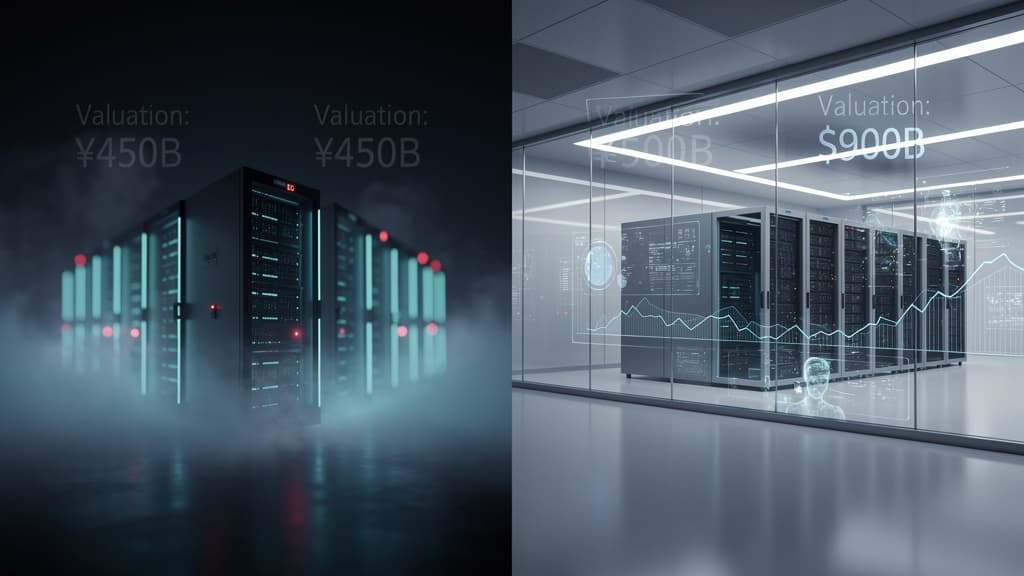
Anthropic's new Mythos-class Claude Fable 5 balances frontier-level reasoning with aggressive safety filtering, aiming to solve critical enterprise AI security risks.
Anthropic has launched Claude Fable 5, the inaugural model in its new Mythos-class tier, and the release is already reshaping conversations about enterprise AI security risks. The model posts a landmark 95% score on SWE-bench Verified — a rigorous software engineering benchmark — while simultaneously blocking approximately 9% of all incoming requests through strict safety filters. That combination of frontier capability and aggressive filtering defines what Anthropic is positioning as a new category of AI deployment for organizations where compliance and risk management are non-negotiable.
What Makes Mythos-Class Different
The Mythos-class designation is not simply a marketing tier. According to reporting from The Decoder and MarkTechPost, Claude Fable 5 and Claude Mythos 5 share the same underlying model weights — the critical differentiator is the safeguard layer applied on top. Mythos-class models ship with a heavier, more restrictive filtering stack than the standard Fable 5 variant, making them purpose-built for enterprise and regulated-industry use cases where a blocked request is preferable to a harmful or non-compliant output.
This architectural separation — same core model, different safety envelope — gives Anthropic a way to serve two distinct buyer profiles without fragmenting its research investment. Developers and power users who want maximum throughput can access Fable 5 directly; enterprises with strict governance requirements can pay a premium for the Mythos-class wrapper.
The 9% Block Rate: Feature or Friction?
The figure that has dominated early reactions is the 9% request-blocking rate. For context, that means roughly one in eleven queries submitted to Claude Fable 5 in Mythos-class mode is refused outright before a response is generated.
"Approximately 9% of requests are blocked by the model's safety filters — a rate that reflects Anthropic's deliberate prioritization of safety over raw accessibility at the frontier."
For consumer applications, a 9% refusal rate would likely be a dealbreaker. For enterprise buyers operating in financial services, healthcare, legal, or government sectors, the calculus is inverted. Regulators and legal teams increasingly treat AI-generated outputs as a source of institutional liability. A model that proactively filters ambiguous or high-risk queries reduces the surface area for compliance failures, data leakage, and reputational damage — all of which represent concrete enterprise AI security risks that procurement teams are now required to evaluate.
The tradeoff is real, however. Teams building agentic pipelines or high-volume automation workflows will need to account for the block rate in their system design, adding fallback logic or human-in-the-loop checkpoints for requests that consistently hit the filter boundary.
Benchmark Leadership and the SWE-bench Milestone
The 95% score on SWE-bench Verified is the headline capability claim. SWE-bench Verified tests a model's ability to resolve real-world GitHub issues — a proxy for autonomous software engineering work — and 95% represents a substantial leap over previously reported scores from competing frontier models. For enterprise buyers evaluating AI for code review, security auditing, and software development acceleration, that number carries direct operational weight.
The benchmark leadership matters for another reason: it signals that the safety filtering in Mythos-class is not being achieved by crippling the model's underlying reasoning. Anthropic appears to have maintained — and extended — raw capability while layering on more aggressive guardrails, a combination that has historically been difficult to achieve without capability regression.
Pricing Reflects the Premium Safety Positioning
Claude Fable 5 is priced at $10 or $50 per million tokens, depending on the access tier — roughly twice the cost of Opus 4.8, Anthropic's previous flagship. That pricing signal is deliberate. Anthropic is not competing on cost efficiency at the Mythos-class level; it is competing on trust, compliance posture, and risk reduction.
For enterprises already paying for legal review, compliance tooling, and security audits, the premium may be straightforward to justify. The harder conversation will be with mid-market buyers who want enterprise-grade safety without enterprise-grade budgets.
According to gHacks, Claude Fable 5 is currently available to Pro Max and Enterprise users, with access free until June 22 — a window that gives enterprise procurement teams a short evaluation runway before the full pricing structure kicks in.
Data Retention and the Compliance Layer
Beyond the filtering architecture, Anthropic has paired the Mythos-class release with a 30-day data retention policy for enterprise deployments. For organizations subject to data minimization requirements under GDPR, HIPAA, or sector-specific regulations, a defined and limited retention window is a meaningful compliance control — one that reduces the risk of sensitive query data persisting in ways that create downstream legal exposure.
The retention policy, combined with the request-blocking layer, positions Claude Fable 5 as a model designed from the ground up to fit inside existing enterprise security frameworks rather than requiring organizations to build custom controls around it.
What to Watch
Three dynamics will determine whether the Mythos-class model achieves meaningful enterprise adoption in the months ahead.
Filter calibration over time. A 9% block rate is a starting point, not a fixed parameter. As enterprise customers deploy the model and report false positives — legitimate business queries caught by overly broad filters — Anthropic will face pressure to refine the safety layer without undermining the compliance positioning that justifies the price premium.
Competitive response. OpenAI and Google DeepMind both offer enterprise AI tiers with safety and compliance features. The Mythos-class framing gives Anthropic a differentiated narrative, but competitors will respond. The question is whether benchmark leadership plus a defined safety architecture is a durable moat or a temporary lead.
Agentic use cases. The SWE-bench score points toward autonomous coding and engineering workflows as the primary enterprise use case. How the 9% block rate interacts with multi-step agentic tasks — where a single blocked step can cascade into pipeline failures — will be a critical real-world test that benchmarks don't capture.
For enterprise technology leaders evaluating frontier AI deployments, Claude Fable 5 represents the clearest articulation yet of a safety-first commercial model. Whether the 9% friction cost is worth the compliance benefit will depend entirely on the risk profile of the workload — and that is exactly the conversation Anthropic wants enterprise buyers to be having.
Last reviewed: June 11, 2026