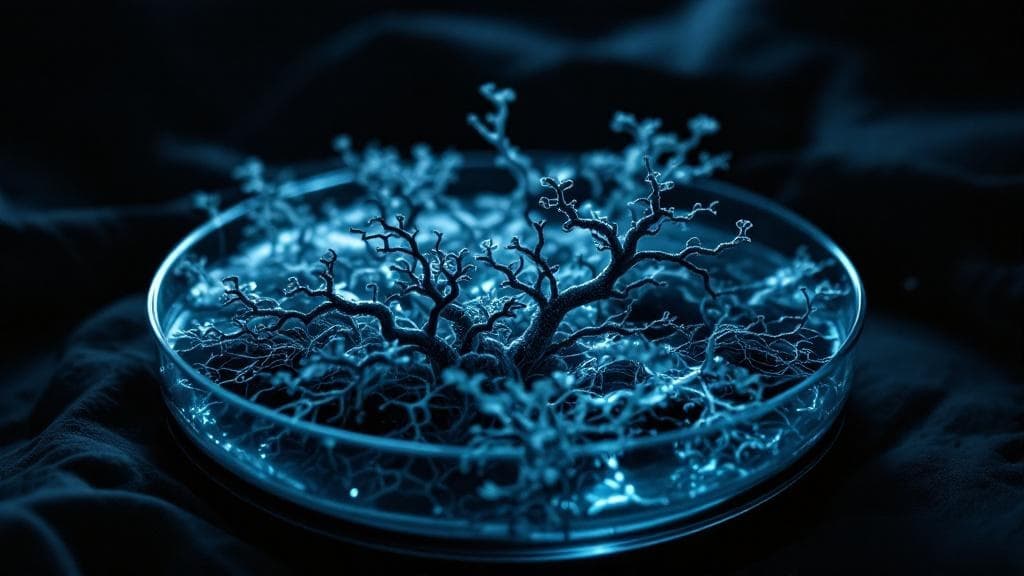
Explore how biological computers, or wetware, are revolutionizing AI by enabling continuous learning systems that mimic human neuroplasticity while drastically reducing energy consumption.
Continuous learning AI systems are artificial intelligence architectures capable of autonomously acquiring, adapting, and retaining new knowledge over time without forgetting prior information. In traditional silicon-based machine learning, this is a massive hurdle; models suffer from "catastrophic forgetting," requiring engineers to pause systems and run highly energy-intensive retraining cycles to update their knowledge base. To achieve true continuous learning, the technology industry is now looking beyond static silicon to the ultimate adaptive processor: the human brain.
A new frontier of computing known as wetware is emerging to solve these hardware limitations. Australian biotech startup Cortical Labs is currently pioneering this shift by building the world's first biological data centers in Melbourne and Singapore. By integrating living human brain cells with microelectrode arrays, these facilities bypass the rigidity of traditional chips. For technology leaders, AI practitioners, and enterprise decision-makers, this transition represents a radical rethinking of compute infrastructure. Biological computers promise to drastically reduce the surging energy demands of generative AI while enabling systems that learn natively and continuously in real-time.
The Anatomy of a Biological Data Center
The infrastructure powering modern AI is facing physical and environmental limits. Hyperscale data centers require massive cooling systems and dedicated power substations just to keep silicon graphics processing units (GPUs) from melting down. Biological data centers take a fundamentally different approach.
Instead of silicon wafers, the core compute substrate in a biological data center is the CL1 unit—a specialized chip that pairs a multi-electrode array with roughly 200,000 living human neurons grown from blood stem cells.
"We spend a lot of money and sweat to build these systems... What Cortical Labs is doing is essentially allowing its biocomputer to be accessible at a large scale." — Michael Barros, University of Essex, via newscientist.com
Cortical Labs has moved this technology out of isolated petri dishes and into scalable infrastructure. The company's first operational prototype in Melbourne houses 120 CL1 biological computing units. Simultaneously, in partnership with DayOne Data Centers and the National University of Singapore, a second facility is under construction. According to industry reports, this Singapore facility will launch with 20 CL1 units for commercial validation before scaling up to 1,000 units upon regulatory approval.
Electrical inputs are sent through these cultured neural networks, and the microelectrodes read the resulting spikes and patterns. Software then translates these biological responses into digital outputs, effectively turning a cluster of living cells into a responsive, programmable processing unit.
Solving the AI Energy Crisis with Neural Efficiency
The primary driver accelerating the commercialization of wetware is the unsustainable energy footprint of traditional AI. According to the International Energy Agency, data centers, AI, and the cryptocurrency sector consumed roughly 460 terawatt-hours (TWh) of electricity in 2022, a figure projected to double by 2026 (iea.org).
Biological computing offers a drastic reduction in power consumption. The human brain operates on roughly 20 watts of power—enough to faintly light a dim bulb—yet it performs continuous learning tasks that would require a supercomputer drawing megawatts of power to simulate.
Cortical Labs has managed to capture a fraction of this biological efficiency in its hardware.
Cortical Labs claims that each CL1 unit requires only about 30 watts of power to operate, compared to the thousands of watts demanded by state-of-the-art conventional AI accelerators. (newscientist.com)
For product managers and infrastructure leads, the implications are profound. A biological data center could theoretically perform complex, continuous learning tasks at a fraction of the energy cost of a GPU cluster. This drastically lowers the total cost of ownership (TCO) for AI compute and opens the door for advanced edge computing, where power availability is strictly limited.
Achieving True Continuous Learning
The most significant technical advantage of wetware is its inherent neuroplasticity. Traditional artificial neural networks (ANNs) mimic the brain only superficially. To learn, a silicon-based ANN relies on backpropagation—a mathematically intensive process that adjusts weights across millions of parameters after processing vast datasets. This is a batch process, not a continuous one.
Living neurons, however, naturally adapt and form new synaptic connections in response to real-time stimuli. This allows biological computers to function as native continuous learning AI systems. They do not need to be taken offline to ingest a new dataset; they learn adaptively as they process information.
The practical application of this continuous learning was demonstrated in March 2026, when Cortical Labs revealed that a cluster of lab-grown neurons successfully learned to play the complex PC game Doom in just one week. This builds on their 2022 milestone, where a smaller neural cluster learned to play Pong.
Unlike a reinforcement learning algorithm running on a GPU, which requires millions of simulated playthroughs and massive energy expenditure to master a game, the biological cells learned through active, continuous sensory feedback in a fraction of the time and energy footprint (uk.moyens.net).
Commercial Implications and Cloud Access
While the concept of biological data centers sounds like science fiction, it is rapidly becoming an accessible cloud service. Through the "Cortical Cloud," researchers and developers can now rent compute time on these biological units, interfacing with living neurons remotely.
For enterprise tech leaders, this presents several actionable insights:
- R&D Diversification: Organizations heavily invested in AI should allocate R&D resources to test wetware cloud environments. Understanding how to interact with biological compute now will provide a massive first-mover advantage as the technology scales.
- New Programming Paradigms: As noted by researchers, you do not program neurons like standard computers. Developers will need to shift from writing deterministic code to designing stimulus-response training environments. The focus moves from coding algorithms to "teaching" networks.
- Sustainability Mandates: For companies facing strict ESG (Environmental, Social, and Governance) targets, biological computing provides a viable roadmap to carbon-neutral AI operations.
The shift from silicon to biology is not just about saving power; it is about fundamentally changing how machines think. By harnessing the innate adaptability of human brain cells, the industry is finally building the foundational infrastructure required for true, continuous learning AI systems.
Frequently Asked Questions
Q: What are continuous learning AI systems?
Continuous learning AI systems are artificial intelligence models that can autonomously learn new tasks and adapt to new data in real-time without forgetting previously learned information. Unlike traditional AI, which requires pausing the system to run energy-intensive retraining cycles on massive datasets, continuous learning systems dynamically update their knowledge base on the fly.
Q: How do biological computers survive in a data center?
Biological computers, or "wetware," rely on specialized life-support enclosures. Units like Cortical Labs' CL1 integrate living human neurons grown from stem cells onto microelectrode arrays. These chips are housed in sterile, temperature-controlled environments that continuously supply the cells with liquid culture media containing the necessary nutrients to keep the biological tissue alive and functioning.
Q: Will biological computers replace GPUs?
In the near term, biological computers will not replace GPUs for deterministic, brute-force mathematical calculations or traditional software rendering. Instead, they will serve as specialized co-processors designed specifically for continuous learning AI tasks, pattern recognition, and adaptive problem-solving where energy efficiency and real-time adaptability are more critical than raw calculation speed.
Last reviewed: April 01, 2026