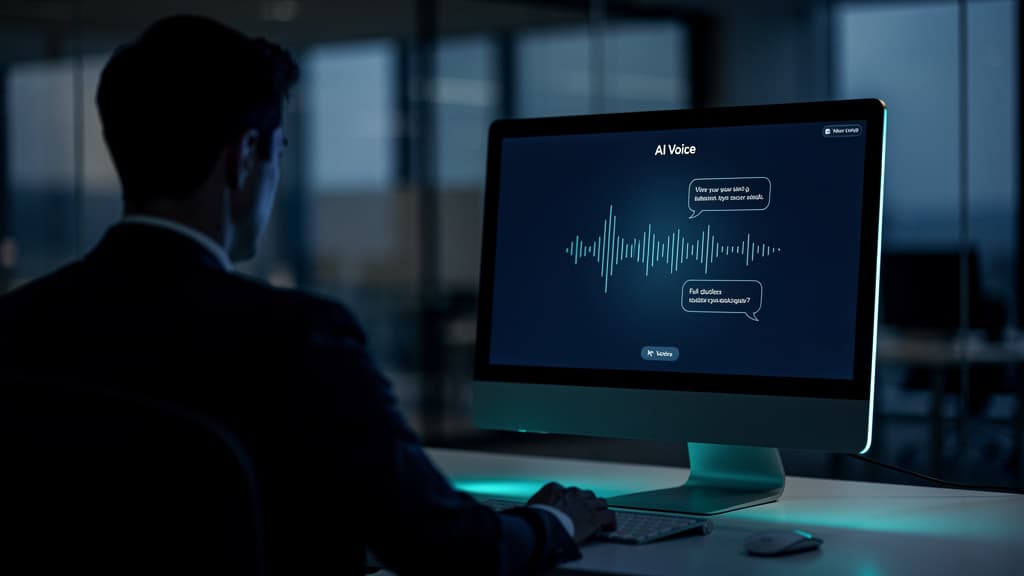
OpenAI's new GPT-Live model eliminates the traditional turn-taking bottleneck in voice AI. By enabling full-duplex communication, it offers a major leap forward for real-time translation and collaborative enterprise workflows.
OpenAI GPT-Live: The End of Turn-Taking in Conversational AI
OpenAI has released GPT-Live and GPT-Live-1 mini, a new generation of voice models that fundamentally rewire how AI handles spoken conversation. Unlike previous voice systems that required one party to finish speaking before the other could respond, GPT-Live uses a full-duplex architecture — allowing the model to listen and speak simultaneously. The result is a conversational experience that mirrors how humans actually talk: with interruptions, clarifications, and real-time back-and-forth that don't grind to a halt every time someone wants to jump in.
The release, announced on July 8, 2026, directly powers ChatGPT Voice and represents one of the most structurally significant changes to AI-driven communication tools in recent memory — particularly for enterprise teams that rely on live translation, real-time collaboration, and voice-enabled workflows.
What Full-Duplex Actually Means
Most voice AI systems — including earlier versions of ChatGPT Voice — operate on a half-duplex model. The system records the user's input, processes it, generates a response, and then delivers it. This sequential pipeline introduces latency at every step and makes interruption nearly impossible without breaking the interaction.
GPT-Live eliminates that pipeline bottleneck. The full-duplex architecture allows the model to process incoming audio while simultaneously generating outgoing speech. According to reporting from The Decoder, this makes AI conversations "seem more human" — not as a marketing claim, but as a technical consequence of removing the enforced silence between turns.
For complex reasoning tasks that arise mid-conversation, GPT-Live delegates to GPT-5.5, OpenAI's more capable reasoning model, without interrupting the voice stream. This separation of concerns — real-time audio handling on one layer, deep reasoning on another — is what makes low-latency performance possible without sacrificing answer quality.
Why This Matters for Enterprise Productivity
The implications for ai tools for enterprise productivity are immediate and concrete. Three use cases stand out:
Real-Time Translation
Live translation has always been hampered by the same problem that plagued voice AI generally: you had to wait. A speaker finishes a sentence, the system translates, the translation plays, and only then does the next speaker respond. In fast-moving business negotiations, multilingual team standups, or international client calls, that delay compounds quickly and disrupts natural communication flow.
GPT-Live's simultaneous listen-and-speak capability changes the math. Translation can begin while a speaker is still talking, and clarifying questions can be inserted without forcing a full stop. For global enterprises managing cross-border teams, this is a practical unlock — not a future roadmap item.
Interactive Team Collaboration
Enterprise voice tools have historically struggled with the "assistant problem": the AI either talks too much, interrupting real conversation, or waits too long and feels unresponsive. Full-duplex architecture gives GPT-Live the ability to monitor a conversation continuously and contribute at natural inflection points — answering a quick factual question mid-meeting, flagging a discrepancy in cited figures, or summarizing a decision as it's being made.
This positions ChatGPT Voice less as a query-response tool and more as a persistent conversational participant — a meaningful shift for teams evaluating AI collaboration software.
Voice-Driven Workflows
For knowledge workers who rely on voice interfaces — field technicians, sales reps on calls, executives between meetings — the removal of turn-taking delays makes voice-driven task management genuinely viable. Dictating notes, updating CRM entries, or querying internal databases mid-conversation becomes fluid rather than transactional.
The GPT-Live-1 Mini Factor
GPT-Live-1 mini is the lighter-weight variant in the release, designed for lower-latency, cost-sensitive deployments. As noted by MarkTechPost, both models delegate deeper reasoning to GPT-5.5 when needed, but GPT-Live-1 mini is optimized for scenarios where speed and efficiency outweigh raw reasoning depth.
For enterprises building voice-enabled applications at scale — customer service bots, internal helpdesks, real-time coaching tools — the mini variant offers a deployment path that doesn't require full GPT-5.5 compute for every interaction. This tiered approach mirrors how OpenAI has structured its text model family and suggests a deliberate strategy for enterprise API adoption.
Competitive Context
OpenAI is not alone in pursuing low-latency voice AI. Google's Project Astra and various real-time voice APIs from startups have been pushing in a similar direction. But GPT-Live's integration directly into ChatGPT Voice — one of the most widely deployed consumer and enterprise AI interfaces — gives it immediate distribution that competitors lack.
According to TechCrunch, the new models are designed specifically for "more natural live conversations," a framing that signals OpenAI's intent to move ChatGPT Voice from a novelty feature toward a core productivity surface.
What to Watch
The near-term questions for enterprise buyers center on API access, pricing, and integration depth. Whether GPT-Live's full-duplex capabilities will be exposed through the OpenAI API — and at what cost per minute — will determine how quickly developers can build it into third-party productivity tools.
The delegation architecture connecting GPT-Live to GPT-5.5 also raises questions about latency under load. In high-concurrency enterprise environments, the handoff between the voice layer and the reasoning layer could introduce its own delays if not carefully managed at infrastructure level.
For now, the release marks a clear inflection point. The turn-taking model that has defined voice AI since its inception is no longer a technical constraint — it's a design choice. And OpenAI has chosen to move past it.
Last reviewed: July 09, 2026