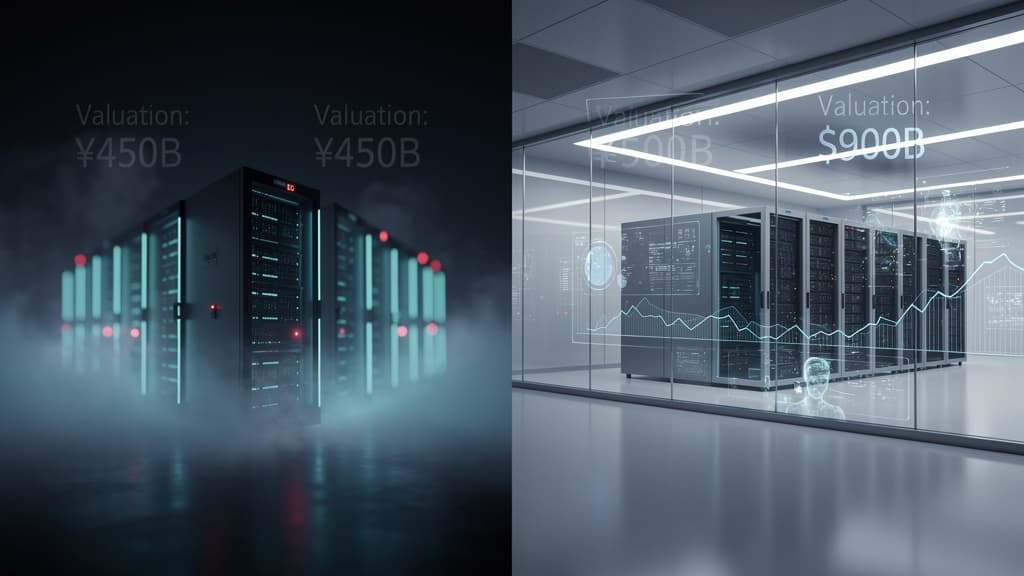
Meta and SoftBank are launching cloud businesses to monetize excess AI compute, challenging hyperscalers and forcing a rethink of enterprise AI transformation strategies and consulting needs.
The cloud infrastructure market is facing its most significant competitive disruption in years. Meta, SoftBank, and SpaceX are each moving to monetize excess AI compute capacity by launching cloud businesses that will compete directly with Amazon Web Services, Google Cloud, and Microsoft Azure — the three hyperscalers that have dominated enterprise AI infrastructure spending for the better part of a decade.
This is not a gradual evolution. It is a structural shift in how AI-native companies generate revenue, and it carries major implications for enterprise technology buyers, AI consulting services providers, and the broader enterprise transformation landscape.
What's Actually Happening
Meta is building a cloud business to sell access to its AI compute power and models to outside customers, positioning the offering as a direct alternative to AWS, Google Cloud, and Azure. According to reporting from TechCrunch and The Decoder, Meta is following a playbook that SpaceX pioneered — using infrastructure built for internal purposes as the foundation of an external revenue line.
SoftBank, meanwhile, is moving aggressively on the enterprise side. According to Bloomberg, the Japanese conglomerate is launching an AI cloud unit with plans to tap a 10-gigawatt capacity and will begin renting AI computing resources to US companies starting next fiscal year. For context, a single gigawatt of data center capacity can power tens of thousands of high-density GPU servers — the scale here is not incremental.
SpaceX, for its part, showed investors an AI device prototype as part of its own compute monetization strategy, signaling that the aerospace company is positioning its infrastructure assets as a technology platform, not just a launch vehicle business.
The Overcapacity Problem That Created This Opportunity
The underlying driver is one that semiconductor investors have been pricing in for months: AI compute overcapacity. The aggressive buildout of GPU clusters and data center infrastructure — accelerated by the 2024–2025 AI investment supercycle — has left several major AI players holding more compute than their internal workloads currently consume.
Semiconductor stock selloffs across Asia have reflected broader market concern that AI infrastructure investment has outpaced near-term demand — creating the conditions for exactly this kind of capacity monetization.
For companies like Meta and SoftBank, the math is straightforward. Idle compute generates zero revenue. Rented compute generates margin. The question becomes whether enterprise buyers will trust non-traditional cloud vendors with production AI workloads — and whether the incumbents will respond aggressively enough to defend their positions.
What This Means for Enterprise Buyers and AI Consulting
For enterprise technology leaders and the AI consulting services firms that advise them, this shift introduces both opportunity and complexity.
On the opportunity side, new entrants create pricing pressure. AWS, Google Cloud, and Azure have operated in a relatively stable competitive equilibrium. A credible fourth or fifth option — particularly one backed by Meta's model ecosystem or SoftBank's $145 billion in committed AI investment — gives enterprise procurement teams genuine leverage in negotiations.
On the complexity side, multi-cloud strategy just got harder. Enterprises already managing workloads across two or three hyperscalers must now evaluate whether Meta's compute-plus-models bundle or SoftBank's capacity-rental model fits their AI transformation roadmap. That evaluation requires technical depth that most internal IT teams don't have — which is precisely where AI consulting services firms will find expanded demand.
The strategic question for enterprises is not simply "which cloud is cheapest" but "which provider's model ecosystem, compliance posture, and integration story best fits our transformation trajectory." Meta's pitch is particularly interesting here: bundling compute with access to its own models creates a vertically integrated offering that could appeal to companies already building on Llama or Meta AI APIs.
The Hyperscaler Response
AWS, Google Cloud, and Microsoft Azure are not standing still. All three have accelerated their own AI-native infrastructure announcements in 2026, and each has deepened partnerships with model providers — Google with Gemini, Microsoft with OpenAI, and AWS with Anthropic — to create ecosystem lock-in that a pure compute rental cannot easily replicate.
The incumbents' strongest defense is not price or raw capacity. It is the depth of enterprise integrations, compliance certifications, and the consulting partner ecosystems that have been built around their platforms over years. A new entrant offering cheaper GPU hours cannot immediately replicate SOC 2 Type II certifications, FedRAMP authorization, or the thousands of certified implementation partners that AWS and Azure have cultivated.
That said, the incumbents cannot ignore a competitor backed by Meta's engineering talent or SoftBank's capital. The 10-gigawatt capacity figure from SoftBank alone represents an infrastructure commitment that demands serious attention.
What to Watch
Several near-term signals will indicate how this competitive dynamic resolves:
- Enterprise adoption rates for Meta's compute offering in the first two quarters after launch — particularly whether Fortune 500 companies move production workloads or limit exposure to development and testing environments
- SoftBank's US enterprise partnerships, which will be announced as the company begins renting capacity next fiscal year; the anchor customers will signal which verticals are most receptive
- Hyperscaler pricing responses, especially in GPU-intensive workload categories where the new entrants are most directly competitive
- Regulatory scrutiny, as Meta entering the cloud market raises questions about data handling, model access, and potential antitrust considerations that did not apply to its prior infrastructure posture
For AI consulting services firms and enterprise transformation leaders, the core takeaway is this: the compute market is becoming more competitive and more complex simultaneously. That combination historically expands demand for expert guidance — and creates real risk for organizations that try to navigate it without one.
Last reviewed: July 02, 2026