New US restrictions on Anthropic's Claude Fable 5 have triggered a geopolitical crisis, forcing global enterprises to confront the reality of sovereign AI dependency and its impact on security.
The Global AI Access Crisis: Macron and Modi Respond to US Restrictions
The US Commerce Department has ordered Anthropic to restrict foreign nationals' access to Claude Fable 5, triggering an immediate geopolitical shockwave that is forcing enterprise technology leaders worldwide to confront a new category of enterprise AI security risks: sovereign dependency on American AI infrastructure. French President Macron and Indian Prime Minister Modi have both raised formal concerns, warning that the US could effectively cut off allied nations from advanced AI capabilities overnight — a prospect that is reshaping international enterprise AI strategy at the highest levels.
What the Commerce Department Actually Ordered
The restriction, reported by TechCrunch on June 17, represents one of the most direct regulatory interventions into commercial AI deployment to date. The US Commerce Department's order requires Anthropic to gate foreign nationals' access to Claude Fable 5 — the company's most capable frontier model — citing national security concerns over advanced AI capabilities reaching adversarial actors.
Anthropichas pushed back against the order, and the company has found an unusual coalition of support: cybersecurity experts who argue that restricting access to safety-focused AI systems may paradoxically increase global security risks by pushing international users toward less safety-conscious alternatives. According to gHacks, cybersecurity professionals have backed Anthropic's resistance, framing the order as counterproductive to the stated security goals.
The Geopolitical Dimension: Allies, Not Just Adversaries
What makes this episode particularly significant is that the concern is not coming from adversarial states. Macron and Modi — leaders of G7 and G20 member nations and key US strategic partners — are the ones sounding the alarm. Their objection is not that the US is restricting AI access to bad actors; it is that even allied nations now face the real possibility of having critical AI infrastructure switched off at Washington's discretion.
The G7 summit context adds weight to this. As AI becomes embedded in everything from government services to enterprise supply chains, the ability of a single government to unilaterally revoke access to a foundational model is no longer a theoretical risk — it is a live policy reality.
"World leaders want American AI. They just don't want America to be able to turn it off." — TechCrunch, June 17, 2026
This framing captures the core tension precisely. The appeal of frontier American AI — its capability, safety research, and ecosystem — remains strong. The political risk attached to dependency on it is now equally undeniable.
Enterprise AI Security Risks: A New Threat Surface
For enterprise technology and security leaders, the Commerce Department's order introduces a threat model that most risk frameworks have not yet fully addressed. Traditional enterprise AI security risks focus on model vulnerabilities, data leakage, adversarial inputs, and compliance exposure. Sovereign access risk — the possibility that a vendor's government compels service interruption — has historically been treated as a low-probability edge case.
That calculus has now changed. Enterprises operating internationally must now evaluate:
- Jurisdictional dependency: Which AI systems are subject to US export control or emergency restriction orders, and what contractual protections, if any, exist?
- Continuity planning: Do enterprise AI workflows have fallback options if a primary frontier model becomes inaccessible to non-US employees or subsidiaries overnight?
- Vendor concentration risk: Over-reliance on a single AI provider — particularly one subject to US government intervention — now carries a distinct category of operational risk.
- Data residency and model access: Even if data is stored locally, model inference routed through US-controlled API infrastructure may be subject to restriction.
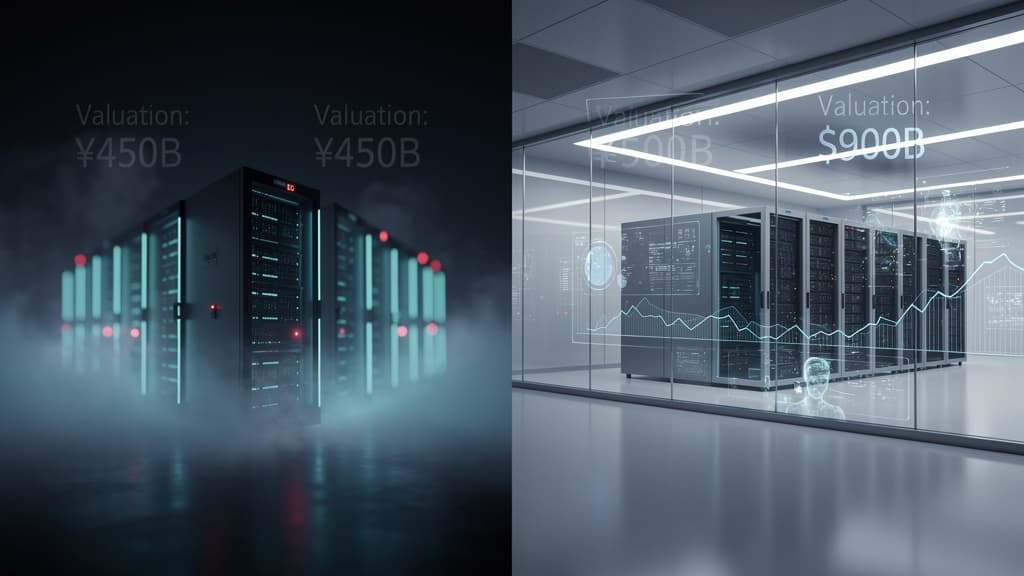
Bloomberg's coverage of the fallout, published June 18, notes that the order is forcing investors to reckon with political risk in a way that AI valuations have not previously priced in. That investor reassessment will ripple into enterprise procurement decisions.
The Strategic Response: Diversification and Sovereign AI
The most immediate strategic response from allied governments has been to accelerate investment in domestic and regional AI alternatives. France has been the most vocal European advocate for AI sovereignty, and Macron's reaction to the Claude Fable 5 restrictions is consistent with his longstanding push for European AI infrastructure independence. India's Modi, meanwhile, faces a different calculus: India's enterprise AI sector has deep integration with US platforms, and an abrupt access restriction would have significant downstream effects on the country's fast-growing technology industry.
For enterprise leaders, the practical implication is a renewed urgency around AI portfolio diversification — maintaining capability across multiple providers, including non-US models, open-weight alternatives, and regionally hosted infrastructure. This is not simply a geopolitical hedge; it is increasingly a standard enterprise risk management requirement.
The episode also strengthens the case for open-weight models as a component of enterprise AI strategy. Models that can be self-hosted — where the enterprise controls the inference infrastructure — are immune to the kind of access restriction the Commerce Department has imposed on Anthropic. The trade-off in capability and safety tooling remains real, but the sovereignty argument for open-weight deployment has rarely been more concrete.
What to Watch Next
Several near-term developments will determine how this situation evolves:
Anthropic's legal and regulatory response: The company's pushback, backed by cybersecurity experts, may result in a negotiated modification of the order's scope. Watch for any Commerce Department clarifications that distinguish between allied-nation access and adversarial-nation restrictions.
G7 and bilateral diplomatic pressure: With Macron and Modi both engaged, there is potential for formal diplomatic channels to influence the order's implementation. A G7-level agreement on allied-nation AI access frameworks is not out of the question.
Enterprise contract renegotiation: Large enterprise customers with international operations will likely begin seeking contractual guarantees — or at minimum, clearer disclosures — around access continuity from US-based AI vendors. Expect this to become a standard procurement requirement.
Competitive positioning of non-US AI providers: European and Asian AI providers, as well as open-weight model communities, will see this as a significant market opening. Expect accelerated enterprise outreach from these players in the coming weeks.
The Commerce Department's order may ultimately be narrowed, reversed, or superseded by diplomatic agreement. But the underlying dynamic it has exposed — that enterprise AI dependency on US-controlled infrastructure carries sovereign risk — is not going away. For technology leaders building AI strategy for international operations, that risk now belongs on the board-level agenda.
Sources:
- TechCrunch: World Leaders Want American AI, They Just Don't Want America to Be Able to Turn It Off
- Bloomberg: Anthropic Ban Forces Investors to Reckon With Political Risk
- gHacks: Anthropic Pushes Back Against US Order Restricting Claude Fable 5, Backed by Cybersecurity Experts
Last reviewed: June 18, 2026