Anthropic has secured 220,000 GPUs via SpaceX's Colossus-1, signaling a major shift in compute capacity. Discover what this means for your 2026 enterprise AI strategy and Claude's future.
Anthropic's Colossus-1 Bet: 220,000 GPUs and the Future of Claude
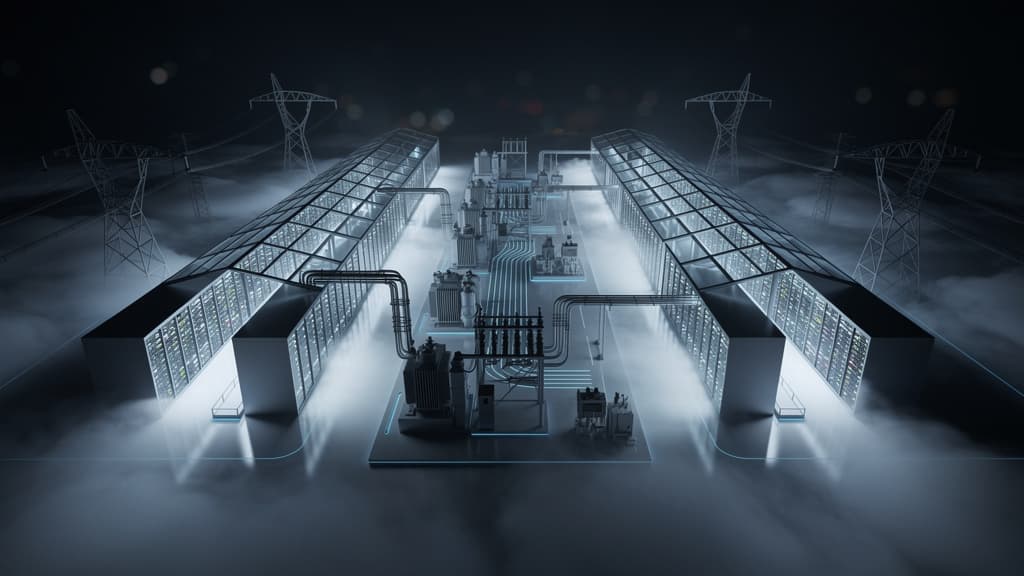
Anthropics has secured full computing capacity of SpaceX's Colossus-1 data center — more than 220,000 NVIDIA GPUs drawing over 300 megawatts of power — in a deal expected to come fully online within a month. The move represents one of the most significant infrastructure consolidations in the AI industry's recent history, and it signals a clear strategic intent: Anthropic is done competing at a compute disadvantage.
For enterprise technology leaders mapping their enterprise AI adoption strategy for 2026, this deal reshapes the calculus around which foundation model providers can actually deliver at scale.
What the Colossus-1 Deal Actually Means
Colossus-1, built and operated by SpaceX, was already notable as one of the largest single-site GPU clusters in the world. Anthropic's acquisition of its full compute capacity — not a slice, not a reserved partition, but the entire facility — is a departure from how AI labs have typically sourced training and inference compute through distributed cloud agreements with AWS, Google Cloud, or Azure.
By locking in a dedicated, purpose-built facility, Anthropic gains several structural advantages:
- Latency and throughput consistency that shared cloud infrastructure cannot guarantee at peak demand
- Cost predictability at a scale that changes the unit economics of serving enterprise API traffic
- Training headroom to push the next generation of Claude models without negotiating burst capacity on the fly
According to reporting by The Decoder and Wired, the deal is expected to be operational imminently, meaning its effects on model availability and performance limits are not a 2027 story — they're a mid-2026 story.
Immediate Signals: Claude Code and Opus Rate Limits
Anthropics isn't waiting for the full Colossus-1 ramp to signal the shift. Alongside the infrastructure announcement, the company has already doubled rate limits for Claude Code and raised API limits for Claude Opus models. These are not marketing gestures — they are direct responses to a consistent complaint from enterprise developers: that Claude's capabilities were bottlenecked not by model quality, but by access constraints.
For engineering teams that have been running Claude Code in production workflows, doubled rate limits translate directly into expanded use cases: longer agentic task chains, higher-concurrency code review pipelines, and more aggressive integration into CI/CD systems. The Opus limit increases similarly unlock use cases that previously required careful traffic shaping to avoid hitting ceilings during peak hours.
Claude Code rate limits have been doubled, and API limits for Opus models have been raised — concrete signs that the Colossus-1 capacity is already beginning to flow through to enterprise customers.
The Competitive Framing: Closing the Gap with OpenAI
The subtext of this deal is impossible to ignore. OpenAI has long held a structural compute advantage, built on its deep partnership with Microsoft and the Azure infrastructure that underpins GPT-4 and GPT-4o at scale. That advantage has allowed OpenAI to offer aggressive rate limits, rapid model iteration, and broad enterprise SLAs in a way that Anthropic has historically struggled to match.
Colossus-1 doesn't erase that gap overnight, but it fundamentally changes the trajectory. With 220,000 GPUs dedicated exclusively to Anthropic's workloads, the company can now:
- Train larger models faster, compressing the iteration cycle between Claude versions
- Serve inference at enterprise scale without the capacity constraints that have pushed some large customers toward OpenAI or Google's Gemini
- Negotiate enterprise contracts with credible SLA commitments, backed by owned infrastructure rather than cloud spot capacity
The timing also matters. Enterprise procurement cycles for AI infrastructure are accelerating in 2026, with many organizations locking in multi-year agreements with foundation model providers. Anthropic needed to demonstrate compute credibility before those windows closed.
Why the SpaceX Partnership Is Strategically Unusual
The choice of SpaceX's Colossus-1 — rather than a hyperscaler expansion — deserves scrutiny. Anthropic already has a significant relationship with Amazon Web Services through a multi-billion dollar investment and compute partnership. Tapping a SpaceX facility for dedicated capacity suggests that AWS alone cannot provide the scale or the dedicated-tenancy guarantees Anthropic requires at this stage.
It also introduces an interesting dynamic: SpaceX, under Elon Musk, is the parent company of xAI, which operates Grok — a direct Claude competitor. The Colossus-1 facility was originally built to train xAI's models. Anthropic essentially acquiring the full output of that facility is a notable competitive twist, even if the business rationale on SpaceX's side is straightforward: monetizing idle or excess capacity.
For enterprise buyers, the key question is infrastructure independence. A dedicated facility, even one owned by a third party, provides more operational isolation than shared cloud tenancy — which matters for customers in regulated industries with data residency or workload isolation requirements.
What Enterprise Teams Should Watch
For technology leaders evaluating or expanding their AI stack in the second half of 2026, several near-term indicators will reveal how effectively Anthropic converts this infrastructure bet into competitive advantage:
Model release cadence: Does the Colossus-1 capacity accelerate the timeline for the next major Claude release? Faster iteration has been OpenAI's primary moat.
Enterprise SLA terms: Watch for changes to Anthropic's enterprise agreements — specifically around uptime guarantees, throughput commitments, and dedicated capacity tiers.
Claude Code adoption in developer workflows: The doubled rate limits are a direct bid for the agentic coding market, where GitHub Copilot, Cursor, and OpenAI's Codex-based tools are the primary competition. Enterprise developer platform decisions made in 2026 will compound over years.
Pricing dynamics: More owned compute typically enables more aggressive pricing. If Anthropic moves to reduce per-token costs for high-volume enterprise contracts, it could trigger a repricing across the market.
The Bigger Picture
The Colossus-1 deal is not just an infrastructure story — it is a statement about what kind of company Anthropic intends to be. The lab has historically positioned itself on safety research and model quality, sometimes at the expense of raw capability and availability. Securing 220,000 GPUs and 300+ megawatts of dedicated power is a signal that Anthropic believes it can no longer afford to let compute constraints define its ceiling.
For enterprise organizations building AI-native products and workflows, the practical implication is that Anthropic is now a more credible infrastructure partner than it was six months ago. Whether that translates into enterprise contract wins depends on execution over the next two quarters — but the foundation has been laid.
Sources: The Decoder | Wired | YouTube coverage
Last reviewed: May 07, 2026